Digital marketing gives small businesses access to customers they might never reach through traditional advertising. A website, search engine visibility, social media, email campaigns, and paid advertising can all help a business attract new customers. However, using more marketing channels does not automatically lead to better results.
A business can receive thousands of website visits and still generate very few enquiries. Social media posts may attract likes without producing sales. Paid advertisements may bring people to a landing page, only for them to leave without taking action.
The problem is not always a lack of traffic. Sometimes, the real issue is what happens after someone discovers the business.
An effective digital marketing strategy for small businesses should do more than generate attention. It should help business owners understand where potential customers lose interest, which activities produce meaningful results, and what needs to change.
This guide introduces a practical approach to finding marketing weaknesses before spending more money on campaigns.
Why More Marketing Traffic Does Not Always Mean More Customers
Many businesses judge marketing performance by visible numbers such as website visits, social media followers, impressions, and clicks. These metrics can be useful, but they do not tell the whole story.
Imagine a small online store that receives 2,000 website visits in one month. Its product pages attract visitors, but only a handful of people complete a purchase.
Increasing the advertising budget might bring more visitors, but it will not necessarily solve the underlying problem. If product information is unclear, delivery costs appear too late, or the checkout process is difficult, additional traffic may simply create more opportunities for people to leave.
The same issue affects service businesses. A digital marketing agency might receive enquiries from its website but struggle to convert them into paying clients because its pricing, services, or next steps are unclear.
Before increasing marketing expenditure, businesses should investigate the journey between the first click and the final customer action.
The Click-to-Customer Gap: A Practical Marketing Audit
The Click-to-Customer Gap is a simple framework for examining the stages between attracting attention and generating a business result. It is a practical audit method, not an industry-standard metric.
Instead of asking only how many people visited a website, examine five stages:
- Discovery: Did the right audience see the business?
- Interest: Did visitors find the information relevant to their needs?
- Consideration: Did they understand the offer, benefits, pricing, and credibility?
- Action: Could they easily purchase, book, subscribe, or submit an enquiry?
- Follow-up: Did the business respond and help interested prospects take the next step?
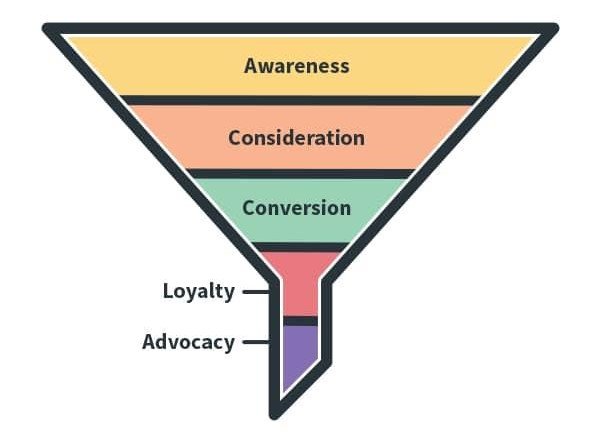
Each stage represents a possible point of friction. A weakness at any stage can reduce the value of the work performed earlier.
For example, a business may attract relevant visitors through search engines but lose them because the landing page does not answer their main questions. Another business may receive good enquiries but lose potential customers because its response process is slow or confusing.
The purpose of this audit is to identify the actual problem rather than assume that every disappointing result requires more advertising.
Step 1: Check Whether Your Marketing Reaches the Right Audience
A high number of clicks can be misleading if the people clicking have little interest in the product or service.
Start by reviewing the search terms, advertisements, social media content, and referral sources that bring visitors to your website. Ask whether these visitors match the audience the business can realistically serve.
For example, a local accounting firm needs enquiries from people who require its services in the locations or markets it supports. Traffic from people looking for unrelated financial information may not produce useful leads.
Similarly, an online store selling premium products should make sure its messaging reaches people who understand the product’s value and are likely to consider its price.
Review these questions:
- Are visitors arriving from relevant searches and campaigns?
- Does the landing page match the promise made in the advertisement?
- Are enquiries coming from the locations and customer groups the business serves?
- Which traffic sources produce qualified enquiries rather than just visits?
If a channel consistently attracts the wrong audience, improve the targeting, search intent, or messaging before increasing its budget.
Step 2: Find the Page Where Visitors Lose Interest
Once the audience is reasonably relevant, examine what visitors do after arriving.
Look at the main landing pages, product pages, service descriptions, enquiry forms, and checkout steps. Identify where people stop progressing toward the intended action.
A useful starting point is to compare the number of visitors who enter a stage with the number who complete it.
For example, suppose 500 people visit a service page, and 25 submit an enquiry. The page’s visitor-to-enquiry conversion rate is 5%.
If the business later receives 600 visits but only 18 enquiries, the conversion rate falls to 3%. Traffic increased, but the page produced fewer enquiries relative to its audience.
These figures do not automatically explain why performance changed. The cause could involve audience quality, a website change, pricing, seasonality, or another factor. They simply identify where further investigation is needed.
Check whether visitors can quickly understand:
- What the business offers.
- Who the product or service is for.
- What problem it solves.
- Why the business is a credible option.
- What the visitor should do next.
Remove unnecessary distractions and make the primary action easy to find. Test one meaningful change at a time so you can better understand what affects the result.
Step 3: Measure Conversions, Not Just Clicks
One of the most useful improvements in digital marketing for small businesses is to define what success actually means.
A conversion is an action that matters to the business. Depending on the business model, it might be a completed purchase, a qualified enquiry, a consultation booking, a newsletter subscription, or a request for a quotation.
Choose a primary conversion for each important campaign. Avoid treating every page view or social media interaction as equally valuable.
For example, a marketing agency could track completed consultation bookings rather than counting every visitor who opens its contact page. An online store could measure completed orders instead of relying only on product-page views.
Basic conversion rate can be calculated as:
Conversion rate = (Number of conversions ÷ Number of visitors or sessions) × 100
Always define the denominator clearly. A rate calculated from users, sessions, or clicks can produce different results, so use a consistent definition when comparing performance.
Businesses can use analytics tools to understand which pages and campaigns contribute to their goals. Google’s official guidance on creating helpful, reliable, people-first content is also useful when improving landing-page content for people rather than writing only for search engines.
Step 4: Connect Marketing Costs to Business Results
A campaign that produces many leads is not necessarily the most profitable campaign. The cost of generating those leads and the likelihood that they become customers also matter.
Consider this illustrative comparison:
Campaign A
- Advertising spend: $300
- Qualified enquiries: 30
- Cost per qualified enquiry: $10
Campaign B
- Advertising spend: $300
- Qualified enquiries: 15
- Cost per qualified enquiry: $20
Campaign A produces qualified enquiries at half the cost. However, the business should not automatically declare it the winner. If Campaign B’s enquiries are more likely to become paying customers or generate more revenue, its overall value may be higher.
The next step is to track the progression from enquiry to customer.
Useful metrics include cost per qualified lead, lead-to-customer conversion rate, customer acquisition cost, and revenue attributable to a campaign where reliable tracking is available.
Customer acquisition cost, or CAC, can be estimated by dividing the relevant acquisition costs by the number of new customers acquired during the same period. Decide which costs to include and apply that definition consistently.
Do not confuse revenue with profit. A campaign can generate sales while still producing a poor financial return after advertising costs, product costs, fulfilment, and other expenses.
Step 5: Investigate What Happens After an Enquiry
Digital marketing does not end when a visitor submits a form or sends a message.
A business may generate promising leads but lose opportunities because enquiries are not reviewed promptly, responses do not answer the customer’s questions, or the next step is unclear.
Review the follow-up process alongside website and advertising performance.
Ask:
- How quickly does the business respond to new enquiries?
- Does the response address the customer’s stated need?
- Is the next step clear, such as scheduling a call or receiving a quotation?
- Are leads recorded so the business can tell which ones become customers?
- Are unanswered enquiries or abandoned bookings being reviewed?
For example, a potential customer who requests a quotation may be comparing several providers. A clear, helpful response can make it easier for that person to understand the offer and decide what to do next.
Follow up appropriately, respect consent and communication preferences, and avoid sending repeated unwanted messages.
Step 6: Use a Simple Weekly Marketing Scorecard
Small businesses do not need dozens of reports to begin improving their marketing. A focused scorecard can reveal whether a campaign is attracting relevant visitors and turning them into business results.

Track a small set of measures that match your business model.
| Metric | What it helps you understand |
|---|---|
| Relevant website traffic | Whether the campaign attracts the intended audience |
| Conversion rate | Whether visitors take the desired action |
| Qualified leads | Whether enquiries fit the business’s target market |
| Cost per qualified lead | How much it costs to generate a suitable enquiry |
| New customers | Whether leads turn into actual business |
| Customer acquisition cost | How much the business spends to acquire a customer |
Review the same reporting period each week or month, depending on traffic volume and the length of the sales cycle.
Do not make major decisions based on a handful of conversions. Small samples fluctuate, and a campaign may need more time to produce reliable evidence. Compare similar periods and consider seasonal changes, promotional activity, and changes in the audience.
The goal is not to collect more numbers. It is to use a small number of meaningful measures to make better decisions.
Step 7: Decide Whether to Fix, Test, or Stop a Campaign
Once the weak stage is identified, choose an action based on the evidence.
Fix the experience when relevant visitors reach the website but struggle to understand the offer, navigate the page, or complete an action.
Test a change when the cause is uncertain. For example, test a clearer headline, a shorter form, stronger product information, or a more relevant call to action. Keep other conditions as consistent as practical.
Review the targeting when traffic is substantial but consistently irrelevant to the offer.
Reduce or pause spending carefully when a campaign repeatedly fails to produce useful results after adequate tracking, a reasonable evaluation period, and relevant improvements. Check for tracking errors and long sales cycles before making a final decision.
Increase investment gradually when a campaign produces consistent, valuable business results and the business can handle additional demand.
This approach helps avoid two expensive mistakes: continuing to fund a weak campaign without investigating it, and abandoning a promising campaign because of a short-term fluctuation.
A 30-Day Digital Marketing Improvement Plan
A practical improvement plan does not require changing every marketing channel at once.
Week 1: Establish the baseline
List your main marketing channels, website landing pages, conversion goals, and current costs. Check that important actions are tracked correctly. Record existing performance before making changes.
Week 2: Identify the biggest weakness
Review audience relevance, landing-page clarity, conversion rates, and enquiry quality. Choose one stage of the customer journey that deserves attention first.
Week 3: Make and measure one improvement
Update the most relevant part of the customer journey. This might mean improving a service page, correcting a mismatch between an advertisement and its landing page, simplifying a form, or improving enquiry follow-up.
Record the change and its date. Avoid making many unrelated changes simultaneously if you want to understand what influenced the result.
Week 4: Review the evidence
Compare the new results with your baseline, taking account of sample size and other changes. Decide whether to keep the improvement, run another test, or investigate a different weakness.
At the end of the month, document what changed, what the data showed, and what the business will test next. This creates a repeatable learning process instead of relying on guesswork.
Common Digital Marketing Mistakes Small Businesses Should Avoid
Several common mistakes can make marketing more expensive or harder to evaluate.
Spending more before checking the problem: More traffic cannot automatically fix a confusing website or a weak offer.
Chasing vanity metrics: Followers, impressions, and likes may show attention, but they do not independently demonstrate business growth.
Using the same message everywhere: A person discovering a business through an informational search may need different information from someone comparing prices or preparing to buy.
Changing everything at once: When multiple elements change together, it becomes difficult to identify which change influenced the result.
Ignoring lead quality: A high volume of unsuitable enquiries can consume time without producing enough customers.
Failing to check tracking: Incorrect analytics, missing conversion events, or inconsistent campaign tagging can lead to incorrect conclusions.
Expecting instant results: Search visibility, customer trust, and longer sales cycles can take time to develop. Evaluate channels according to their role and the time they reasonably need to produce results.
Frequently Asked Questions
What is the best digital marketing strategy for a small business?
The best strategy depends on the target audience, business model, budget, and customer journey. Start by identifying the audience you want to reach, selecting suitable channels, defining a meaningful conversion, and measuring whether those activities produce qualified leads or customers.
How can a small business reduce digital marketing costs?
Identify which channels and customer-journey stages produce useful results. Improve targeting, landing-page clarity, conversion tracking, and lead follow-up before increasing spending. Reduce investment in consistently weak campaigns only after checking data quality and allowing a reasonable evaluation period.
How much should a small business spend on digital marketing?
There is no single budget that suits every business. Consider available cash flow, profit margins, customer acquisition costs, growth goals, and how much demand the business can serve. Begin with a budget the business can afford to test and evaluate, then adjust it using reliable results.
Which digital marketing metrics matter most?
For many businesses, useful measures include qualified leads, conversion rate, cost per qualified lead, customer acquisition cost, and revenue or profit attributable to marketing where measurement is reliable. The right metrics depend on whether the business sells products, provides services, or operates on a subscription model.
How long does it take to see digital marketing results?
The timeline depends on the channel, competition, budget, audience, offer, and sales cycle. Paid campaigns may produce early data quickly, while organic search visibility and customer trust often take longer to develop. Use early results to diagnose problems, but avoid treating a small amount of data as conclusive proof.
Final Thoughts
Effective digital marketing for small business is not about being present on every platform or continually increasing advertising expenditure. It is about understanding how people discover a business, what helps them make a decision, and where the customer journey breaks down.
Start with a clear conversion goal. Check the quality of your traffic, examine the pages and processes that influence customer decisions, and connect marketing costs to actual business outcomes. Then make focused improvements and measure the results.
The most valuable marketing decision may not be to launch another campaign. It may be to fix the problem preventing the campaigns you already run from delivering their full value.